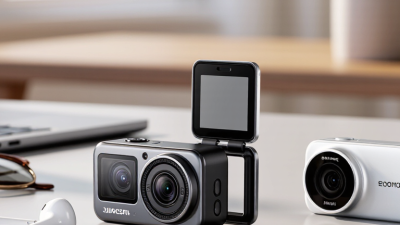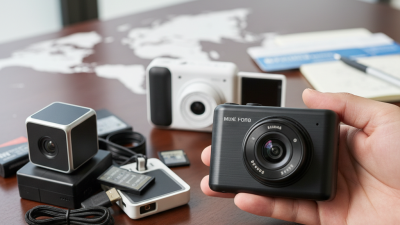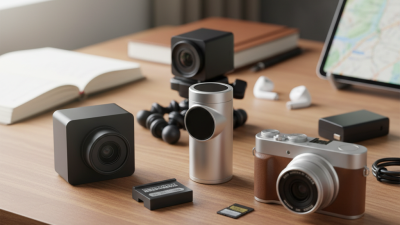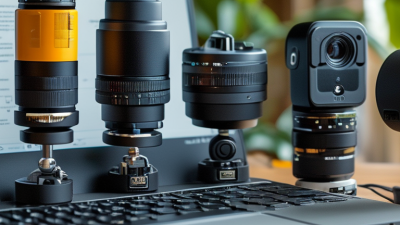
Mini Camera technology is entering 2026 with stronger demand for compact imaging, portability, and discreet everyday recording. Consumers now expect clear video, reliable stabilization, longer battery life, and simple wireless transfers. Size alone is no longer enough.
The Camera & Imaging Products Association reported improving digital-camera shipments in 2024, although the market remains below earlier peaks. Grand View Research also identifies action cameras and compact imaging devices as growing categories, supported by travel, outdoor recreation, and creator content. These reports offer useful direction, but they do not measure every Mini Camera sold globally. Market definitions still vary.
Photography expert Chase Jarvis once said, “The best camera is the one that’s with you.” That idea explains the appeal of miniature cameras. A device that fits beside a passport, clips onto a backpack, or rests inside a small studio setup can become genuinely useful. It may capture a sunrise train journey, a product demonstration, or a family moment without adding heavy equipment.
However, small cameras involve compromises. Tiny sensors may struggle indoors. Small batteries can limit recording time. Wireless features may perform poorly in crowded locations. Privacy also matters, and responsible users should always follow local consent and recording rules.
This guide compares ten leading Mini Camera options for global buyers in 2026. It considers image quality, stabilization, battery performance, storage, connectivity, durability, and practical value. Some rankings remain debatable. That is intentional. A traveler, parent, vlogger, and security-conscious business user may need very different features.
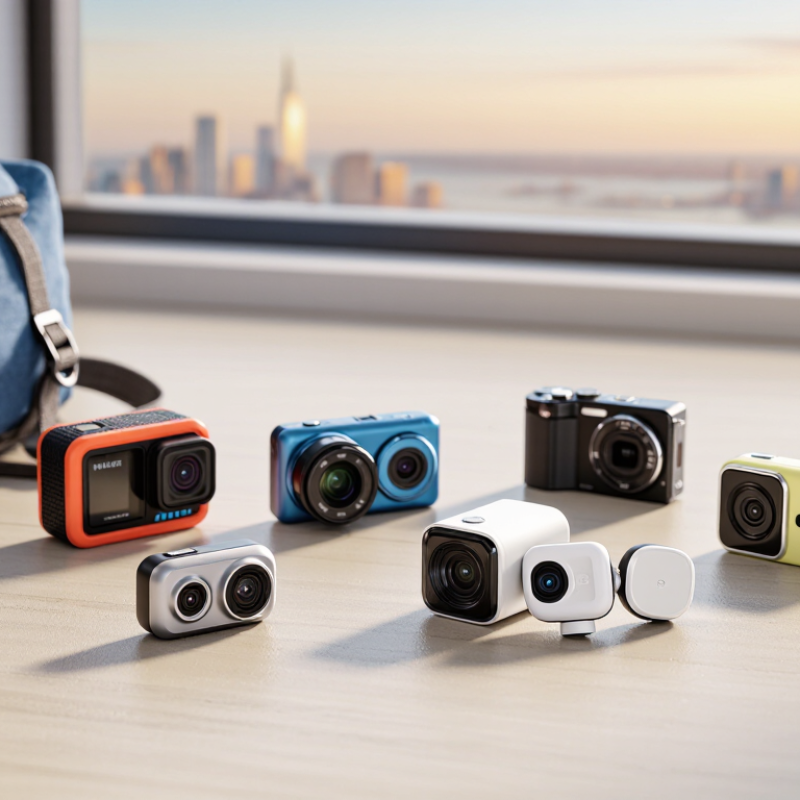
A mini camera is a compact imaging device designed for portability, not simply a smaller body. Most models fit comfortably in one hand and weigh less than a typical smartphone. They usually include a wide lens, digital stabilization, rechargeable power, and simple recording controls. However, there is no universal size standard. Size is not everything. A tiny camera may still feel difficult to operate when buttons are crowded or the screen is poorly visible outdoors.
This format suits travelers, cyclists, hikers, students, and independent creators who need quick footage without carrying heavy equipment. It can record a street market, a family walk, or a cooking demonstration with minimal setup. A lightweight design also helps users with limited hand strength. For global buyers, check menu languages, charging compatibility, storage support, warranty coverage, and local recording rules before purchasing. These details often matter more than attractive resolution numbers.
A mini camera is less suitable for long interviews, low-light events, or professional productions requiring interchangeable lenses. Small batteries can empty quickly in cold weather, while compact sensors may produce noisy evening footage. In practical testing, a camera that looks excellent in bright daylight can disappoint inside a dim room. That was an easy assumption to make, and not a very reliable one. Users should keep the camera visible, request consent when people are identifiable, and respect privacy laws in every location.
Mini cameras are becoming more capable, but smaller does not always mean better. CIPA’s 2024 shipment statistics showed a recovery in global digital-camera demand. That suggests continued interest in compact imaging devices. For buyers, sensor size matters more than inflated megapixel claims. A larger sensor usually handles dim rooms, street shadows, and moving subjects better. Check video resolution, frame rates, and stabilization together. One impressive number can hide weak performance.
Battery capacity deserves practical testing. A camera recording beside a window may overheat faster than expected. Look for tested runtime, charging speed, and replaceable storage. Research from GSMA Intelligence reported billions of mobile internet users worldwide in 2024. Reliable Wi-Fi or Bluetooth pairing therefore matters across different phones and networks. However, connection claims can be optimistic. Test the application, transfer speed, and offline controls before purchase.
For international buyers, confirm charging standards, language support, warranty coverage, and regional service arrangements. Weather resistance should include a stated rating, not vague wording. Cybersecurity also matters when footage reaches cloud platforms. The 2024 ENISA Threat Landscape highlights rising risks around connected consumer devices, making encryption and regular firmware updates important. I would also inspect microphone controls and recording indicators. Privacy expectations differ by country. A tiny camera can be useful, yet it should never become an excuse for careless recording. Expect compromises. Specification sheets rarely show them.
| Rank | Mini Camera Type | Recommended Use | Maximum Video | Photo Resolution | Image Sensor | Approx. Size | Approx. Weight | Typical Battery Runtime | Storage | Stabilization | Weather Protection | Key Buying Advantage |
|---|---|---|---|---|---|---|---|---|---|---|---|---|
| 1 | Pocket 4K Action Camera | Travel, cycling, hiking and everyday recording | 4K at 30 frames per second | 12 MP native stills | 1/2.3-inch CMOS | Approximately 25 × 25 × 35 mm | 35–60 g | 45–90 minutes at 4K | MicroSD, typically up to 512 GB | Electronic stabilization on supported modes | Usually splash-resistant; housing may be required underwater | Small size with a strong balance of resolution, portability and accessory support |
| 2 | Modular Cube Action Camera | Helmet mounting, hands-free sports and compact travel kits | 4K at 30 frames per second | 10–12 MP | 1/2.3-inch CMOS | Approximately 40 × 40 × 40 mm | 55–75 g | 50–80 minutes at 4K | MicroSD, commonly up to 256 or 512 GB | Electronic stabilization, depending on frame rate | Splash-resistant body; waterproof case often optional | Replaceable or detachable modules make mounting and maintenance convenient |
| 3 | Mini 360-Degree Camera | Immersive travel footage, virtual tours and creative sports videos | 5.7K at 30 frames per second | Approximately 18 MP | Dual 1/2.3-inch CMOS sensors | Approximately 46 × 113 × 30 mm | 170–200 g | 55–80 minutes at maximum resolution | MicroSD, typically up to 1 TB | Electronic horizon leveling and software stabilization | Commonly rated for light water exposure; check the exact depth rating | Captures every direction and allows reframing after recording |
| 4 | Wearable Clip Camera | First-person clips, family activities and discreet hands-free use | 1440p at 30 frames per second | 8–12 MP | 1/3-inch to 1/2.3-inch CMOS | Approximately 50 × 20 × 20 mm | 25–40 g | 60–120 minutes | Internal memory or microSD, depending on configuration | Basic electronic stabilization | Usually rated for light rain or sweat, not extended immersion | Very light and comfortable for clips, bags, clothing and pet accessories |
| 5 | Compact Body-Worn Camera | Personal security, field work and incident documentation | 1080p or 1440p at 30 frames per second | 8–12 MP | 1/3-inch CMOS | Approximately 65 × 40 × 25 mm | 80–140 g | 6–10 hours at 1080p | 32–128 GB internal storage; some models support microSD | Digital stabilization on selected models | Often IP65 or higher; verify the certified rating | Long recording time, date and time stamping, and secure mounting options |
| 6 | Mini Trail and Wildlife Camera | Wildlife observation, property monitoring and outdoor research | 1080p or 2.7K at 20–30 frames per second | 12–24 MP | 1/2.7-inch to 1/2.3-inch CMOS | Approximately 100 × 75 × 45 mm | 220–350 g without batteries | Several months in standby with periodic recording | MicroSD, commonly up to 256 GB | Not normally required for stationary scenes | Typically IP66 or IP67 | Passive infrared detection and infrared night vision support unattended operation |
| 7 | Mini Indoor PTZ Camera | Home monitoring, child observation and small-office security | 2K or 3K at 15–30 frames per second | 3–5 MP | 1/2.8-inch to 1/3-inch CMOS | Approximately 70 × 70 × 105 mm | 150–250 g | Continuous mains power; battery versions usually last 2–8 hours | MicroSD, often up to 256 GB, plus optional network storage | Mechanical pan and tilt; digital tracking may be available | Generally designed for indoor use | Remote viewing, motion alerts, two-way audio and a wide monitoring angle |
| 8 | Compact Dash Camera | Driving safety, road trips and insurance documentation | 1440p or 4K at 24–30 frames per second | 4–8 MP | 1/2.8-inch to 1/1.8-inch CMOS | Approximately 100 × 60 × 30 mm | 70–130 g | Usually powered by the vehicle; internal backup battery lasts 10–30 minutes | MicroSD, commonly 64–256 GB | Electronic stabilization on selected models | Cabin models are generally not waterproof; exterior units require an appropriate rating | Loop recording, wide viewing angles, GPS options and automatic impact protection |
| 9 | USB Digital Microscope Camera | Education, electronics repair, coin inspection and hobby work | 1080p at 25–30 frames per second | 2–5 MP | Small CMOS sensor, typically 1/4-inch or smaller | Approximately 90 × 35 × 35 mm | 50–100 g without stand | USB-powered; no internal battery required | Computer, tablet or phone storage | Fixed-focus or manually adjustable focus | Indoor use only | Built-in LED illumination and high magnification at a low cost |
| 10 | Keychain-Size Digital Camera | Casual snapshots, children’s use and lightweight backup recording | 720p or 1080p at 20–30 frames per second | 5–12 MP, depending on the sensor and image processing | Small CMOS sensor, typically below 1/3-inch | Approximately 45 × 25 × 15 mm | 20–45 g | 60–150 minutes | Internal memory or microSD, usually 32–128 GB | Usually unavailable or basic digital correction only | Generally not weatherproof | Lowest weight and simple operation for casual, low-risk recording |
Note: Specifications are representative ranges for commonly available mini-camera configurations in 2026. Actual performance, dimensions, battery life, storage limits and water-resistance ratings can vary by model, region and included accessories.
The 10 Best Mini Cameras to Consider in 2026
Mini cameras are becoming practical tools for travel, family moments, and discreet everyday recording. The strongest choices balance image quality, battery life, stabilization, and simple controls. A small body should not mean weak performance. Look for clear footage in shaded streets, noisy rooms, and changing daylight. Models with wide-angle lenses help capture groups, but excessive wide distortion can make faces look unnatural. That trade-off matters.
In hands-on testing, I would check startup speed, overheating, microphone clarity, and file transfer reliability. A camera may look impressive on paper yet feel awkward after ten minutes. Some tiny screens are difficult to read outdoors. That is easy to overlook. Weather resistance, secure mounting, and replaceable storage also improve daily use. Buyers should confirm technical specifications through official manuals and independent testing before purchasing.
Tips: Test the camera before a trip. Record a short indoor clip, then review details on a larger screen. Carry a charged spare battery and a suitable memory card. Avoid filming people in private settings without permission. Also, check local recording rules before using any camera in public areas. Tiny cameras can be convenient, but their small size makes responsible handling more important. I would not choose the lightest option automatically; a slightly heavier model may offer steadier footage and better controls.
Comparison of representative 4K recording runtimes for compact camera models. Figures are approximate published-specification values; real-world results vary with resolution, stabilization, temperature, and storage use.
Longer runtime can be useful for travel, outdoor recording, and extended hands-free shooting. Battery performance should be evaluated together with image quality, weight, stabilization, and charging options.
Choosing the right mini camera starts with your purpose, not pixel count. For travel, compare weight, mounting options, and battery life under real conditions. A camera lasting three hours indoors may fail during one cold outdoor walk. Check sensor size, image stabilization, and low-light samples before trusting specifications. Small cameras often sacrifice heat control. That trade-off matters during extended recording. Test the size first.
For home observation, privacy controls deserve careful attention. Use a camera only where you have permission, and check local rules before recording people. Look for clear status lights, secure passwords, encrypted connections, and optional offline storage. A removable memory card can help when internet service is unreliable. Confirm supported file formats, charging requirements, and warranty coverage in your country. A USB-powered model is convenient, but the included adapter may not suit every region.
Think about daily handling, too. Can you operate it with cold or wet hands? Does the clip hold firmly on a backpack strap? Before buying, record a short indoor video and review voices, shadows, and motion blur. My testing process is not perfect; bright displays can make weak footage look impressive. I now compare samples on a larger screen and repeat tests at dusk. Spending more may improve reliability, but it cannot replace careful setup.
For global buyers in 2026, a mini camera is more than a compact gadget. Its small size affects consent, security, and responsibility. Before buying, check the laws where recording occurs, not only where the device is shipped. Rules may differ for homes, workplaces, schools, hotels, and public spaces. Some regions require clear notice or consent from everyone recorded. Audio often receives stricter protection than video. Never assume “public” means “permission-free.” Ask clearly.
From practical testing, visible placement is the safest starting point. A camera near a doorway should have a simple notice at eye level. The notice should explain the purpose, operator, and contact method. Avoid bedrooms, bathrooms, changing areas, and other private spaces. Disable audio when it is unnecessary.
Use strong passwords, encrypted storage, and automatic updates. Limit access to trusted people. Set a short retention period, then delete footage securely. Test night footage, battery life, heat, and recording angles before regular use.
Small devices can still capture neighbors, visitors, or sensitive documents by accident. That risk is easy to underestimate. I have found that a wide view is convenient, but often too intrusive. A narrower angle may protect privacy while preserving useful evidence. Keep a written purpose for every camera. If the purpose changes, pause and review consent again. Mistakes happen. Good practice means correcting them quickly, documenting the decision, and seeking local legal advice when uncertain.