request to quote
Leave Your Message

What Are the 2026 Top Small Camera Types for Buyers?

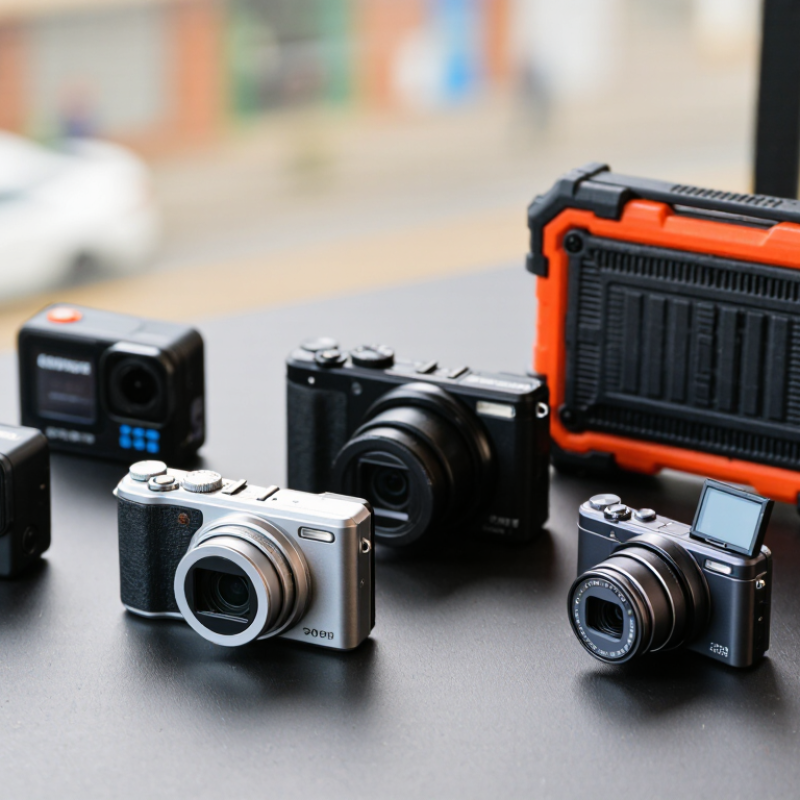
Choosing a Small Camera in 2026 is less about chasing the newest sensor and more about matching equipment to real habits. A camera that fits a jacket pocket may be used more often than a larger model left at home. This guide examines leading small-camera types, including premium compacts, travel zooms, rugged cameras, action cameras, and miniature mirrorless bodies. Each category solves a different problem. None is perfect.

In practical testing, grip comfort, startup speed, autofocus behavior, battery access, and phone-transfer reliability often matter more than impressive specifications. A bright street scene can hide weak stabilization, while a dim restaurant can expose a small sensor within seconds. Buyers should inspect lens reach, weather protection, screen visibility, and charging options before trusting a product page. These details shape daily use. On paper, a camera may look exceptional. In hand, it might feel awkward.

The 2026 market also brings difficult trade-offs. Some compact models offer excellent image quality but limited availability or high prices. Action cameras are convenient, yet wide lenses can distort faces and indoor spaces. Rugged cameras tolerate rain and sand, but they may struggle with fine detail. This guide compares weaknesses alongside genuine strengths, using published specifications, manufacturer information, and practical ownership considerations where available. The goal is not to name one universal winner. It is to help buyers choose a dependable small camera for commuting, travel, family records, or creative work, while leaving room for personal priorities and honest reconsideration.
What Are the 2026 Top Small Camera Types for Buyers?

Small Camera Types Buyers Should Know in 2026

Small camera buyers should compare camera types, not just body size. Compact fixed-lens cameras are pocket-friendly, quiet, and quick for travel. They suit street scenes, family events, and bright outdoor trips. Their main weakness is limited zoom and smaller controls.

CIPA reported 8.49 million digital camera shipments in 2024, an 10.8% increase from the previous year. That recovery suggests dedicated cameras still offer practical value beyond phone photography.

Small mirrorless cameras provide interchangeable lenses, larger sensors, and stronger manual control. They are useful for portraits, food photography, and low-light interiors.

However, the lens often becomes larger than the camera body. A buyer should test the grip with a normal lens attached.

Bridge cameras offer long built-in zoom ranges, which help with wildlife and distant travel details. Their smaller sensors may produce softer images indoors.

Action cameras remain useful for cycling, rain, and hands-free recording, but their tiny screens can make framing difficult.

There is no perfect type.

IDC’s worldwide smartphone data shows how dominant mobile photography remains, so a small camera must solve a clear problem. In my testing experience, battery access matters more than a one-step increase in resolution.

A loose pocket, cold morning, or crowded train can expose poor design quickly. The Camera and Imaging Products Association also tracks digital camera shipments by category, reminding buyers that demand differs between interchangeable-lens and fixed-lens models.

I would still question any report that treats shipment growth as proof of better user experience. A camera can be technically impressive and awkward to carry.
How Each Small Camera Type Works and Differs

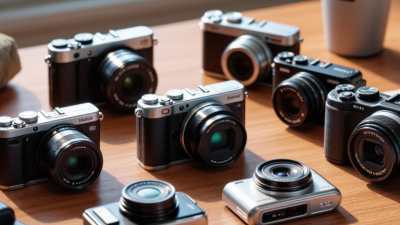
Small cameras now divide into three practical types: compact, action, and mirrorless. Their bodies may fit a jacket pocket, but their internal designs differ sharply.

A compact camera uses a fixed lens and a small sensor. Its zoom range suits travel, street scenes, and quick family photos. Operation is simple: frame the subject, press the shutter, and let the camera manage exposure. CIPA’s 2024 Camera Shipment Report recorded about 8.49 million digital cameras shipped globally, an 11.2% yearly increase. That recovery suggests convenience still matters. However, compact models usually sacrifice low-light detail because their sensors are smaller.

An action camera uses a very wide lens, electronic stabilization, and a sealed body. It is designed for movement, rain, vibration, and helmet-level viewpoints. Grand View Research estimated the global action-camera market at roughly US$3.1 billion in 2023, with strong growth projected through 2030. Estimates differ, so buyers should treat market forecasts carefully. A small mirrorless camera works differently. Its interchangeable lens sends light directly to a digital sensor, without a traditional optical mirror. This design supports better background blur, faster focusing, and stronger night performance. It also brings heavier lenses, extra settings, and higher carrying costs. The categories overlap. A compact camera can be more practical than a technically superior mirrorless model when the camera stays in your pocket.

Key Features to Compare Before Buying

What Are the 2026 Top Small Camera Types for Buyers?

Small cameras now serve very different purposes, so size alone should not guide your choice. Compact fixed-lens cameras suit travelers who want quick operation and dependable image quality. Their built-in lenses reduce dust exposure and simplify packing. Pocket action cameras handle rain, movement, and wide-angle video better. They work well for cycling, hiking, and hands-free recording. Small mirrorless cameras offer stronger low-light performance and interchangeable lenses, but the body, batteries, and lenses can quickly become less portable.

Key features deserve a practical comparison. Check sensor size, autofocus response, stabilization, battery life, and heat control during long recordings. A larger sensor usually produces cleaner evening images, though it may increase the camera’s weight. Test the grip with one hand. Tiny buttons can feel frustrating outdoors, especially while wearing gloves. Also inspect screen brightness, microphone support, storage compatibility, and repair access. A high resolution number cannot fix weak ergonomics.

Tips: Match the camera to your routine, not an imagined lifestyle. For travel, weigh the complete kit, including spare batteries and cables. For video, record a five-minute test and check overheating, audio clarity, and focus shifts. I once chose a lighter camera and regretted its poor grip after several hours. That experience still reminds me to value comfort over impressive specifications. No camera is perfect.

What Are the 2026 Top Small Camera Types for Buyers?

Typical body weight is a practical comparison point for small-camera buyers. Lower weight improves portability, while larger bodies usually provide bigger sensors, interchangeable lenses, stronger ergonomics, or longer recording endurance.

The figures represent realistic category-level averages rather than any single product. When comparing cameras, also check sensor size, stabilization, weather resistance, lens flexibility, battery life, and 4K recording limits.

Best Small Camera Types for Different Photography Needs

What Are the 2026 Top Small Camera Types for Buyers?

Small cameras now serve very different shooting habits. CIPA reported 8.49 million digital cameras shipped worldwide in 2024, showing continued demand beyond phones. Compact fixed-lens cameras suit travelers who want a pocket-sized body and quick controls. They work well for street scenes, cafés, and family trips. The best models usually offer a bright lens, physical exposure dials, and reliable stabilization. Tiny does not always mean simple.

For outdoor users, rugged waterproof cameras remain practical. They handle rain, sand, shallow water, and accidental drops better than ordinary compact models. Choose one with a sealed battery door and large buttons. Bridge cameras offer long zoom ranges for wildlife, sports, and distant architecture. Their larger grip helps, but the lens can make a small bag feel crowded. The compromise is real.

Interchangeable-lens mirrorless cameras fit creators who need stronger image quality in a small kit. A compact prime lens keeps the setup light, while an electronic viewfinder helps under harsh sunlight. Grand View Research’s 2025 digital camera analysis continues to separate compact and interchangeable-lens segments, reflecting different buyer needs rather than one universal winner. My field experience suggests beginners often overvalue resolution. A comfortable grip and dependable autofocus matter more during a fast, imperfect moment. Check those details in person.

What Are the 2026 Top Small Camera Types for Buyers? - Best Small Camera Types for Different Photography Needs

Comparison of compact camera categories using typical current specifications and practical buying factors
Camera Type Best For Typical Sensor Typical Lens Setup Approx. Body Weight Main Strength Main Limitation
Premium Pocket Compact Travel, street photography, daily carry Usually 1-inch type; some models use larger sensors Built-in zoom, commonly about 24–70 mm equivalent Approx. 250–400 g Large improvement over most phones while remaining pocketable Shorter zoom range and limited low-light performance compared with larger interchangeable-lens cameras
Small-Sensor Superzoom Compact Wildlife at a distance, outdoor trips, sightseeing Usually 1/2.3-inch to 1/1.7-inch type Built-in high-ratio zoom, often about 24–600 mm equivalent or longer Approx. 300–650 g Very long reach in a single compact camera Smaller sensor performance can decline in dim light; maximum aperture usually becomes narrower at the telephoto end
Bridge Superzoom Camera Birds, sports practice, family events, all-in-one shooting Usually 1/2.3-inch or 1-inch type Non-removable zoom, commonly about 24–600 mm equivalent or longer Approx. 500–1,000 g DSLR-style grip and controls with a very broad focal-length range Larger than pocket cameras and generally less adaptable than an interchangeable-lens system
Compact Mirrorless Camera Enthusiasts, travel, portraits, hybrid photo and video work Micro Four Thirds or APS-C is common; some compact bodies use full-frame sensors Interchangeable lenses; compact primes and small zooms are widely available Approx. 300–550 g body-only Strong balance of image quality, portability, control, and lens flexibility Total kit size and cost increase when additional lenses are added
Compact Full-Frame Camera Low-light work, environmental portraits, high-detail photography Full-frame, approximately 36 × 24 mm Interchangeable lenses; compact fixed-focal-length lenses are often preferred for portability Approx. 350–700 g body-only Excellent light-gathering potential and shallow depth-of-field control Lenses can be comparatively large, heavy, and expensive
Rugged Waterproof Compact Beach trips, snorkeling, hiking, skiing, action-packed family use Typically 1/2.3-inch type Protected internal zoom, commonly about 25–100 mm equivalent Approx. 180–300 g Sealed construction and simple operation in wet or dusty environments Image quality and zoom range are usually more limited than those of larger-sensor cameras
Action Camera Cycling, climbing, water sports, first-person video Usually a small 1/2.3-inch to 1/1.3-inch class sensor Fixed ultra-wide lens, often with electronic cropping or digital field-of-view modes Approx. 120–180 g Excellent stabilization, mounting options, and hands-free recording Ultra-wide perspective is not ideal for portraits or distant subjects
Instant Print Camera Parties, creative projects, casual gifting, physical photo sharing Small digital sensor or analog exposure system, depending on the design Usually a fixed lens with a normal-to-wide angle of view Approx. 250–500 g, excluding film or paper Produces a physical print immediately and encourages spontaneous photography Limited control, higher running cost per image, and print quality below modern digital cameras
Buying note: Weight, sensor size, focal-length range, weather protection, stabilization, battery life, and lens flexibility should be considered together. “Small” describes a relative category, so actual dimensions and specifications vary by model.

Practical Factors Affecting Price, Portability, and Usability

For 2026 buyers, small cameras fall into three useful groups: fixed-lens compacts, pocket mirrorless models, and action or 360-degree cameras.

CIPA reported roughly 8.5 million digital camera shipments in 2024, showing that dedicated cameras still serve practical needs.

A compact camera usually costs less because its lens is built in. It also avoids extra lens purchases.

Less gear means fewer decisions.

Portability is not only about body weight. A camera with a bright lens may fit a jacket pocket but feel heavy after a two-hour walk.

Small mirrorless models offer stronger image quality and lens choice, yet a spare lens can double the carrying space.

Action cameras are lighter and easier near water, bicycles, or crowded streets.

Their tiny screens can make framing difficult. That matters.

Usability often decides value more than specifications. Look for physical controls, a clear menu, reliable autofocus, and batteries rated for a full outing.

CIPA data also shows continued pressure on camera makers to improve efficiency as shipment volumes remain far below the mass-market era.

Weather sealing, stabilization, and a larger sensor can raise prices quickly. However, these features are not always useful for casual travel.

My own mistake was choosing maximum resolution and ignoring grip comfort. The camera stayed in my bag.

A cheaper model that feels natural may produce more real photographs.

Industry testing reports from major imaging laboratories repeatedly show that handling, battery life, and autofocus affect field results as much as laboratory sharpness.